

Looking for a quick example of based in a sentence? You are in the right place. Here are four ready-to-use examples you can copy and paste right now:
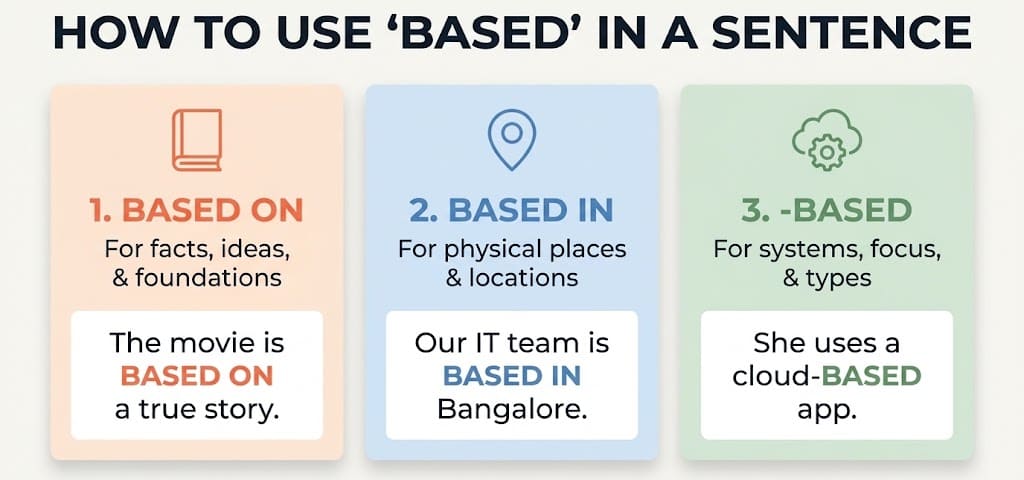
- The movie is based on a true story.
- Our IT team is based in Bangalore.
- She uses a cloud-based app for her notes.
- Please make your decision based on facts.
Quick rule of thumb: Use based on for facts and ideas, based in for physical places, and -based (with a hyphen) to describe what something runs on or focuses on. That’s the core English grammar rule. Now let’s make it stick with more context.
10 Simple Sentences with “Based” (Quick Examples for Students)
Preparing for an IELTS exam, a TOEFL test, or a class presentation? Start here. These sentence examples mix school, work, and daily life scenarios for ESL students and professionals:
- My cousin is based in Hyderabad.
- We use a cloud-based tool for payroll.
- Her essay is based on three interviews.
- This is a web-based app, so you don’t need to install it.
- The company is based in Pune, but the team works remotely.
- Please write your answer based on the reading passage.
- He follows a plant-based diet for his health.
- The freelance fee is based on your experience.
- I am based in Delhi for the next six months.
- The final grade is based on attendance and exams.
How to Use “Based” in a Sentence by Context
The meaning completely changes depending on the word that comes immediately after it. That tiny preposition does all the heavy lifting. Here’s a quick grammar cheat sheet. Screenshot it or tape it to your monitor:
| Form | Use it for… | Example in a sentence |
| based on | Facts, ideas, reasons, stories | The report is based on survey data. |
| based in | Cities, offices, physical locations | Our team is based in Noida. |
| -based | Describing a type, system, or core ingredient | It’s a cloud-based tool. |
| based (slang) | Authentic, fearless opinions | That’s a based take. |
1. “Based On” in a Sentence (Facts, Ideas & Foundations)
Use based on when talking about facts, true stories, or data.
Use “based on” when something grows out of a source: a decision, a story, a reason, or a foundation. It is the variation you will use the most in professional and academic writing.
- The movie sequel is based on a bestselling novel.
- Our pricing model is based on the number of active users.
- Based on your resume, we would like to schedule an interview.
- The test questions are based on Chapter 4.
- I made this decision based on data, not gut feeling.
- The project report is based on customer feedback.
- Her argument is based on one simple idea: speed matters.
- Don’t judge people based on their accent.
- The application’s design is based on user research.
2. “Based In” in a Sentence (Cities, Locations & Workplaces)
Use based in to state where a person works or where a company is located.
This one is all about where. Use it for a person’s current working city or a company’s main headquarters. Writing “I am based in Mumbai” in a professional email sounds much better than saying “I live in Mumbai”.
- Our IT support team is based in Bangalore.
- She is based in Chennai, but she travels often for business.
- The startup is based in Gurgaon, near the metro station.
- Our global support desk is based in Manila.
- He works for a financial firm based in London.
- I am currently based in Dubai. Where are you based?
- The conference organizer is based in Singapore.
- My college is based in a small town near Pune.
- Our head office is based in Noida.
3. “-Based” as a Suffix or Compound Adjective (Plant-based, Cloud-based)
Add -based with a hyphen to describe what a tool, system, or diet runs on.
Here, “-based” attaches to a word with a hyphen, and together they work like one single adjective. This pattern is everywhere in tech and business vocabulary (yes, even your LinkedIn bio probably has one).
- Many corporate teams prefer a cloud-based CRM.
- She is following a plant-based diet this year.
- This is a skill-based hiring assessment.
- Our yearly bonus plan is strictly performance-based.
- It’s a tech-based startup with a very small team.
- Use a web-based editor if your laptop is too slow.
- Rice-based dishes are common in many Indian homes.
- The university course uses project-based learning.
- We offer subscription-based pricing for our software.

4. “Based” in Social Media & Slang Sentences
Use based by itself to praise someone’s honest or bold opinion.
On Reddit, Instagram, and Twitter/X, “based” means something totally different. It describes a person who is authentic and doesn’t care what the crowd thinks. They say what they believe, even when it’s unpopular. Today, it is mostly used as a compliment.
- That’s a based opinion, and honestly, I agree with it.
- Everyone in the comments panicked, but he stayed based.
- Wow, based take on the new movie.
- She said exactly what she thought without apologizing. Absolutely based.
- Being based means you don’t need likes to feel sure of yourself.
- That reply was based and incredibly funny.
- “Pineapple on pizza is fine. Call me based.”
- Bro, you’re based for saying that in public.
Pro Tip: Keep this one for friends and internet comment sections. Don’t use it in a client email unless you enjoy awkward silence.
Grammar Rules: When to Use “Base”, “Based”, or “Basing” in Sentences
These three words share the same root vocabulary but do different grammatical jobs depending on the tense.
- Base (Noun, Verb, Adjective): Used for present-tense actions or physical foundations. (Example: I base my advice on research.)
- Based (Past/Adjective): Used for finished actions or descriptions. (Example: The film is based on a book.)
- Basing (Gerund/Continuous): Used for an action happening right now. (Example: She is basing her essay on a real case.)
Examples of “Base” in a Sentence (Noun, Verb & Base Adjective)
- The base of the building is made of solid stone. (noun)
- We need to build a stronger customer base. (noun)
- The soldiers returned to the military base. (noun)
- They base their pricing on market demand. (verb)
- I base my advice on years of experience. (verb)
- Choose a base color for the website first. (adjective)
- Mix flour and water to make the pizza base. (noun)
Examples of “Basing” in a Sentence
- She is basing her essay on a real court case.
- We are basing the new budget on last year’s sales.
- Basing a major financial decision on rumors is risky.
- Stop basing your opinion on just one bad review.
How to Use “Touch Base” in a Sentence (Business Idiom)
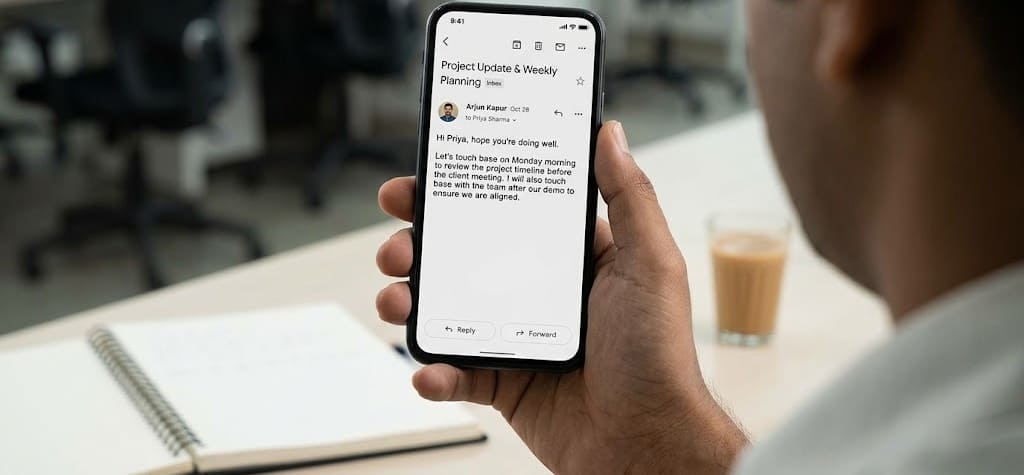
Use “touch base” in work emails when you want to briefly contact or check in with someone for an update.
- Let’s touch base on Monday morning.
- I will touch base with the client immediately after the demo.
- Can we touch base before the marketing meeting?
- I just wanted to touch base about the pending invoice.
- Please touch base with HR if you have any questions.
“Touch base” is a very popular office idiom that means to “contact someone briefly to share updates.” It originally comes from baseball, but you don’t need to love sports to use it. These five lines are ready for your next professional email:
- Let’s touch base on Monday morning.
- I will touch base with the client immediately after the demo.
- Can we touch base before the marketing meeting?
- I just wanted to touch base about the pending invoice.
- Please touch base with HR if you have any questions.
Bonus Related Word: “Baseness” in a Sentence
“Baseness” is a rare, formal noun meaning low moral quality, such as cruelty or dishonesty. You will find it in classic literature and news analysis, but almost never in casual chats.
- The villain’s baseness shocked the whole town.
- Readers hated the baseness of his lie.
- Cruelty like that shows true human baseness.
Common Mistakes: “Based On” vs. “Based From” vs. “Instead of From”
Let’s be blunt: “based from” is grammatically incorrect. It is not “informal” or “less common”; it is simply not standard English. Here is how to fix this common ESL mistake:
- Incorrect: The story is based from real events. Correct: The story is based on real events.
- Incorrect: I’m based from Mumbai. Correct: I’m based in Mumbai.
- Incorrect: Based from the data, we should wait. Correct: Based on the data, we should wait.
- Incorrect: Our company is based at Pune. Correct: Our company is based in Pune.
Frequently Asked Questions
The grammatically correct phrase is “based on,” not “based from.” Use based on for facts, ideas, and stories, and based in for geographical places. For example, say, “The report is based on survey data” or “Our team is based in Pune.” The phrase “based from” is never correct in standard English.
To use “based” instead of “from,” you must choose the preposition that matches your meaning. Write “based on” for the source of an idea, “based in” for a physical location, and “-based” with a hyphen for a specific type. For example: “This plan is based on last year’s data.”
In social media slang, “based” means being authentic, confident, and completely unbothered by criticism. A based person says what they truly think, even when it is unpopular. For example, “That’s a based take” praises an honest opinion. Keep it for internet forums, not formal emails.
In a sentence, “bases” has a few meanings depending on its form. As a plural noun, it means foundations or starting points (e.g., “military bases”). As a third-person verb, it means building upon something (e.g., “she bases her advice on research”).
Final Takeaway
Remember three simple rules: Based on is for reasons and facts, based in is for cities and places, and -based describes a type of system. Master those, and most of your grammar confusion will disappear. Pick five sentences from this page and rewrite them in your own words today!